

VISION
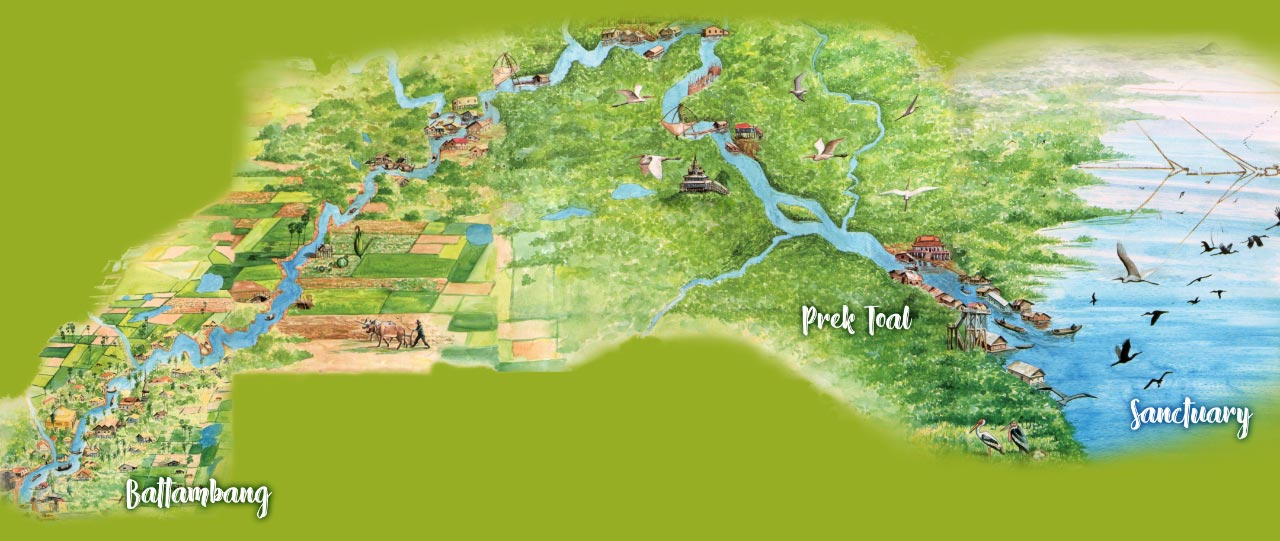
L’environnement naturel et humain extraordinaire de la zone de Prek Toal a inspiré la vision d’Osmose : il est le meilleur atout pour le développement des communautés locales. A travers ses interventions, Osmose initie, teste et accompagne de nouveaux modes d’utilisation et de valorisation durables des ressources naturelles locales.
OBJECTIF
L’objectif d’Osmose est d’associer protection des colonies d’oiseaux de Prek Toal et bénéfices socio-économiques pour les populations lacustres. L’approche Osmose intègre des activités de sensibilisation (éducation à l’environnement) et des activités génératrices de revenus (écotourisme, artisanat) auprès de familles défavorisées, incluant les anciens collecteurs d’oiseaux.
ACTIONS CONCRÈTES
Les visites écotouristiques de la réserve ornithologique et du village flottant de Prek Toal sont une composante du projet intégré. Elles permettent :
• de créer des emplois locaux
• de générer des revenus directs et indirects
• de financer le programme d’éducation à l’environnement
• de fournir un soutien scolaire et sanitaire.

CONTACTEZ-NOUS

House # 0203, Group 8, Phum Wat Damnak, Sangkat Salakamreuk, Siem Reap, Cambodia PO Box 93-118

+855 12 832 812 / +855 63 765 506

comms@osmosetonlesap.net
©OSMOSE - 2019
Made with passion by Cruise Sec Production